


Quaker A-Z: H is for History

Wendrie Heywood

H is for History

The starting questions to ask here are:

  • Who’s history is it?
  • Who is the history for?
  • What are you going to do with this?

Once you know the answers it is easier to start…

Here are some ideas on how to collect, use and display your history.

This doesn’t have to be a big complicated project. You can start over coffee in a group.

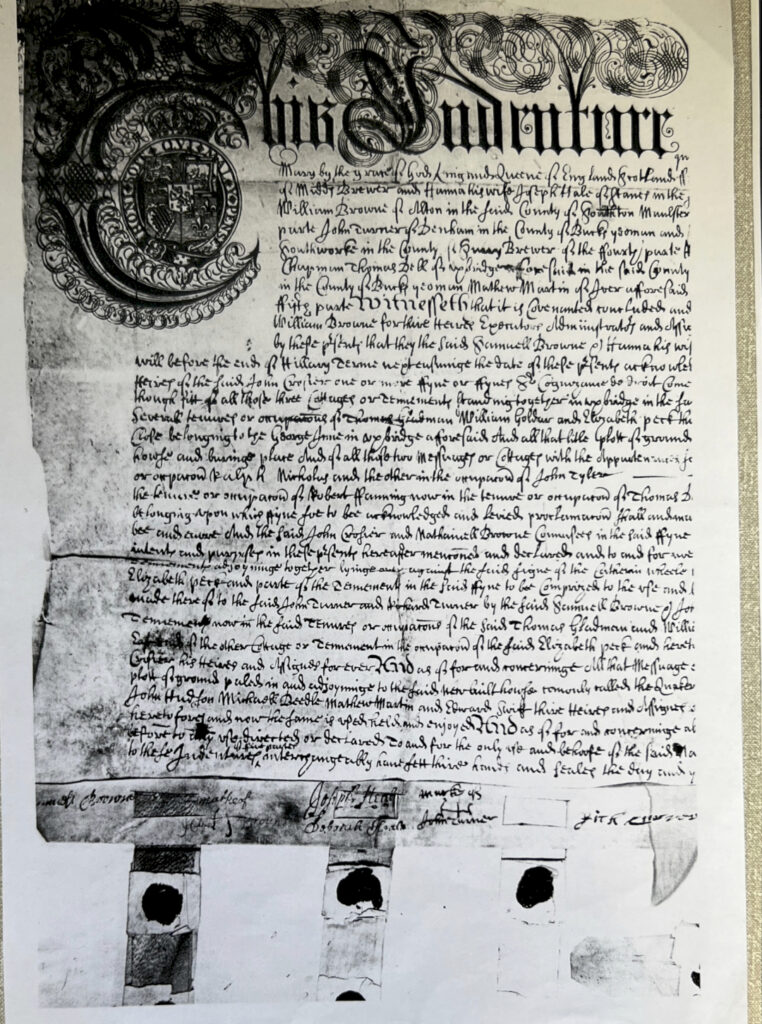
a photo of the deed of Uxbridge Quaker Meeting land
The deed of Uxbridge Quaker land.

Video or Oral history

Have you asked some of your oldest members of the meeting for a record of their memories? 

Videos of events, or interviews can give insights and cause hilarity. 

Walking around a building with a smartphone videoing the building and garden can be helpful for comparison, and for insurance purposes.

Having younger members interview older members is great fun, but that doesn’t necessarily mean under 18s. You can come up with some questions (oral history sites have suggestions) or just ask ‘tell me about your earliest memories’ and let the conversation flow.

The Quaker Tapestry is a series of over seventy embroidered panels illustrating the history and experiences of Friends. It sprang from an idea in a children’s class in a Somerset meeting in 1981, and has been made by many hands in many meetings. It is a new way of sharing Quaker insights through exhibitions in Britain, Ireland and other countries. It is now on permanent exhibition at Kendal Meeting House.

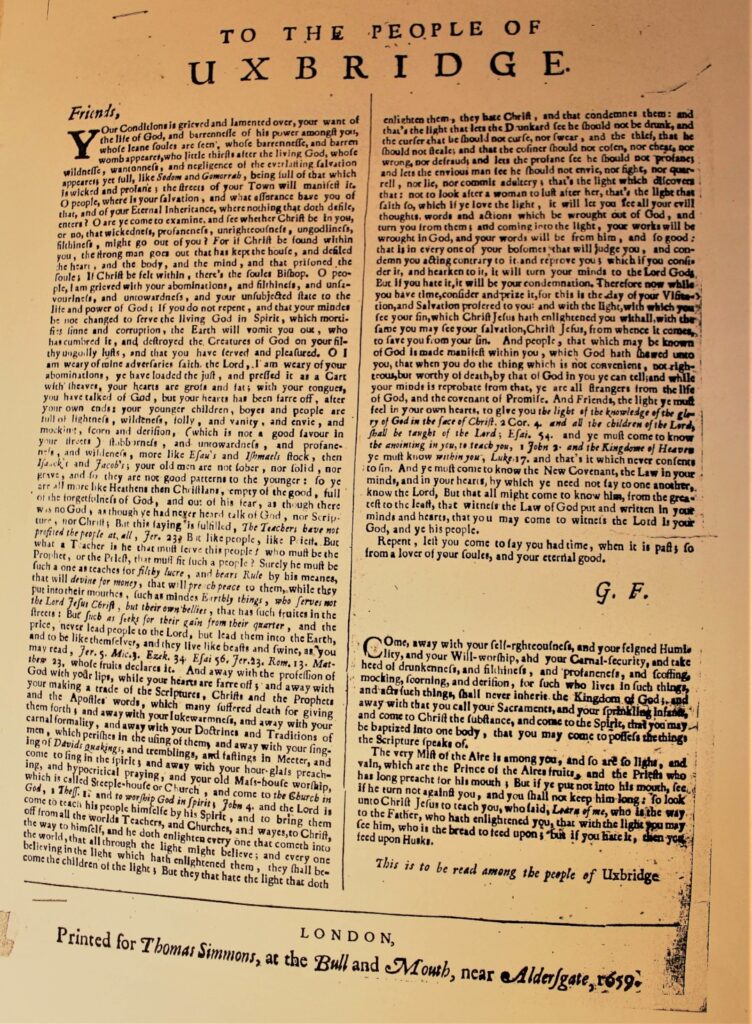
a photo of the letter from George Fox to the people of Uxbridge
Photograph large documents!
paving slab saying 1997 Quakers work at the UN to bring about landmine ban treaty.
Etched paving stones

Paper and digital archives

If the history is for local Quakers then adding pages to your website, taking photos of your documents and photos to ensure copies are kept safely in archives – rather than in damp sugar paper albums…

Or if the history is for visitors, the public passing by, consider putting up notices or plaques. Friends House put in engraved paving stones in the new garden.

During COVID lockdowns, Open House in London suggested making videos. The video for Uxbridge has been used during open houses since, and is up on their website too.

Websites can hold a large quantity of information – just ensure you have back up copies of the documents, photos etc.

You can link to other websites – such as Discovering Quakers or Britain Yearly Meeting.

In fact history does not belong to us; but we belong to it.

Here are some of the blog posts in the Quaker History category!

You might also like…

Leave a Reply

Your email address will not be published. Required fields are marked *

You might also like: