
Category: Inclusion
Posts on how to ensure our buildings, facilities, charities and communities can include everyone.
How can we build a community in which each person is accepted and nurtured, and strangers are welcome?
-

Quaker A-Z: Z is for Gen Z
Bringing Younger Voices Into Your Charity’s Story For our final letter in the A–Z of Charity Communications, we’re celebrating a generation who see the world differently, and who can help charities stay relevant, inclusive and forward-looking. Z is for Gen Z, and their perspective is something every charity can benefit from. Gen Z refers to
-
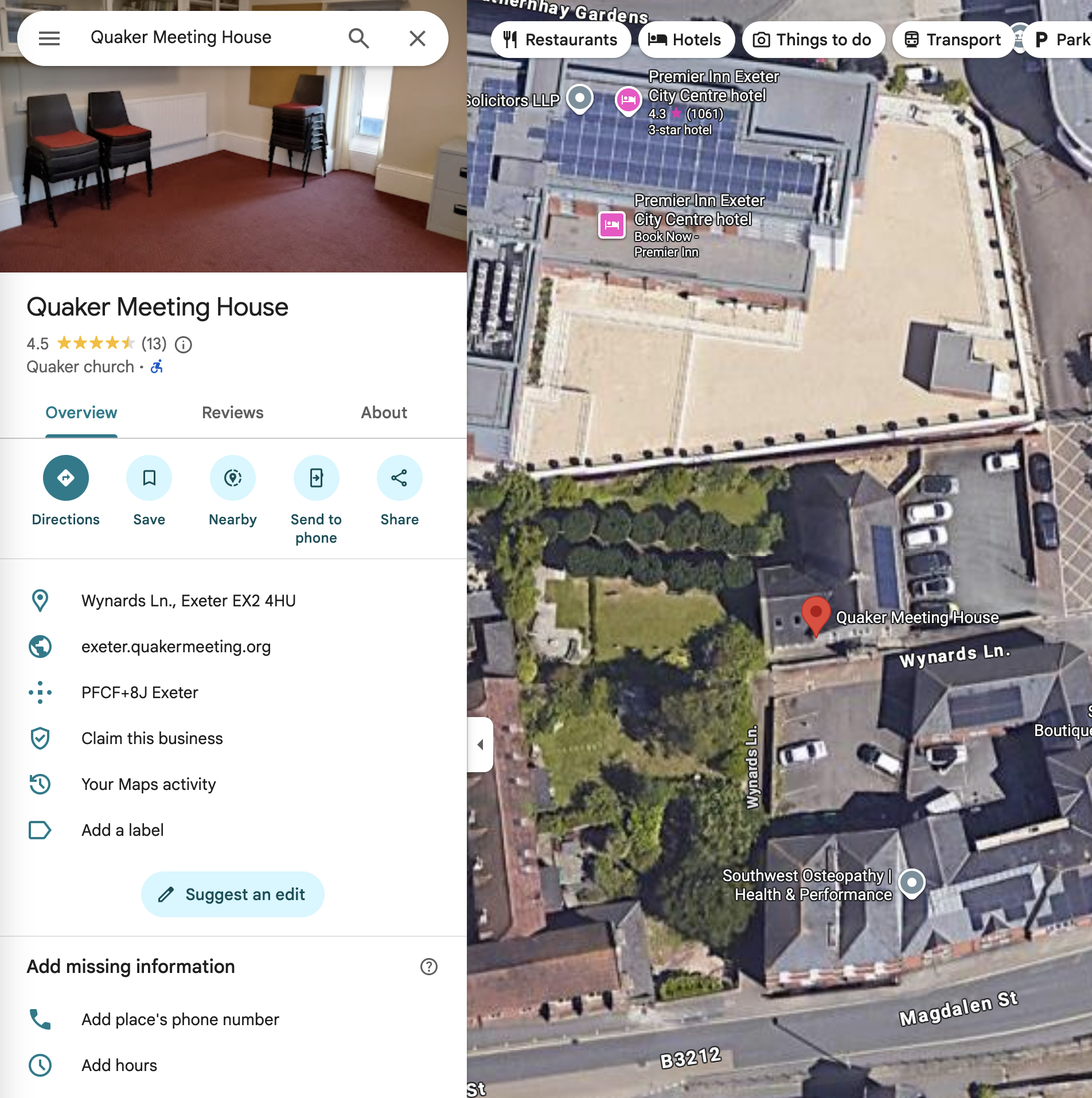
Quaker A-Z: X is for X marks the spot (again)
Do you appear on the map? If someone is looking for your building – does it appear on the map? Hopefully it appears as at least a grey block! But… is it labelled? are there signposts? have you claimed your charity/building/business on Google maps? do you appear on local neighbourhood maps? When I lived and
-

Quaker A-Z: S is for Simplicity
Simple Things Communicating with others doesn’t have to be complicated. It can be simple. You just need to decide who you want to talk to, and about what. Then work out what is required, and who can do that – remembering that you don’t have to do it all. Photo by Glen Carrie on Unsplash
-

Quaker A-Z: Q is for Quakerly
What does Quakerly mean? I dislike Quakerly as a adjective. It is usually used in a pejorative, not in a friendly way! “THAT wasn’t very Quakerly….‘ With the ‘THAT’ being something the speaker feels passionately about. But it isn’t actually a specific corporate testimony. If it is a specific corporate testimony then you can say, ‘Quakers
-

Quaker A-Z: P is for Protest & Presentations
Talking to others and ourselves During Yearly Meeting this year there was a vigil outside Friends House. As I was attending virtually I went into the garden and thought about the two questions asked: What is your outward message of peace, love and justice for the world? And what is your inward message to yourself?
-

Quaker A-Z: N is for Nosiness & Noteworthy
Nosiness = Knowing each other in the things that are eternal Nosiness isn’t always negative. I love learning about people – many of them Quakers. I do this by going to Yearly Meeting, reading The Friend, visiting other meetings, or even looking through their minutes and newsletters. I often joke that one of the best
-
Quaker A-Z: L is for Living Faithfully
How do we live faithfully? At Yearly Meeting two questions were asked: What is your message of peace for the world? What brings you a sense of inner peace? Photo by Brett Jordan on Unsplash Radical Peacemaking was the theme Agenda Committee chose for this year. We were reminded that radical means from the
-
Quaker A-Z: K is for Kindness
How can we be kind? Kindness is often mistaken for passivity or politeness, but true kindness is deeply courageous. It requires us to stay present in difficult moments, to act with integrity, and to see the humanity in others even when we disagree. For Quakers, kindness is rooted in the belief that there is that
-

Quaker A-Z: G is for Gardens and Greening
Gardens – a place to gather and share. This week we explore the use of gardens and what they say about your organisation.

